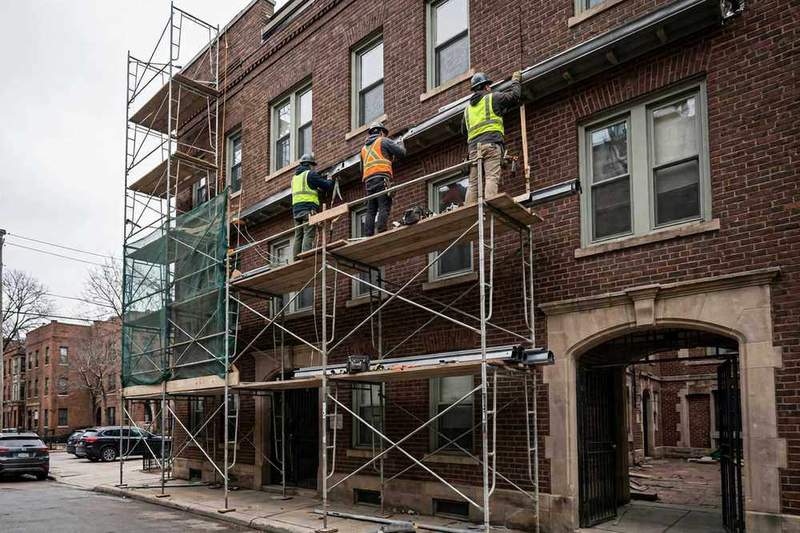
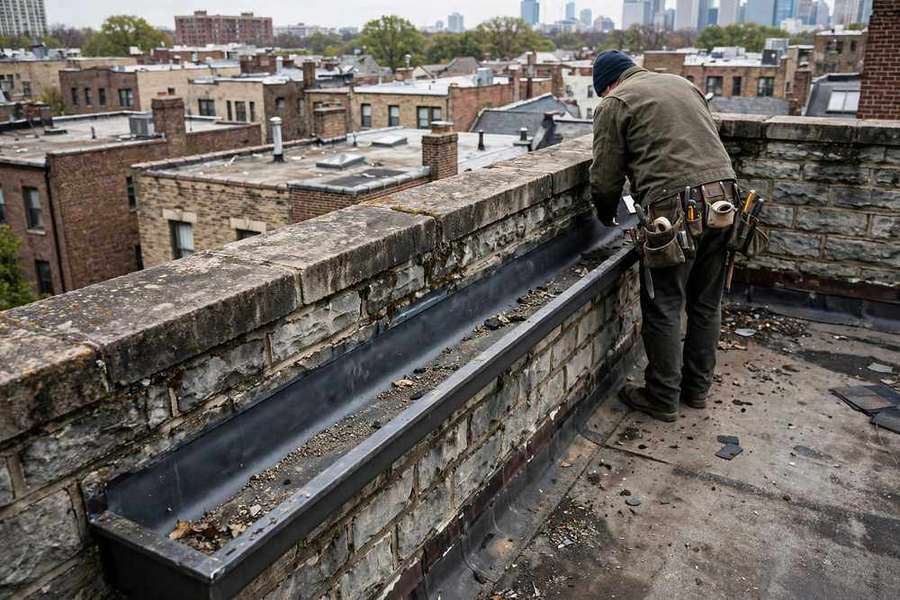
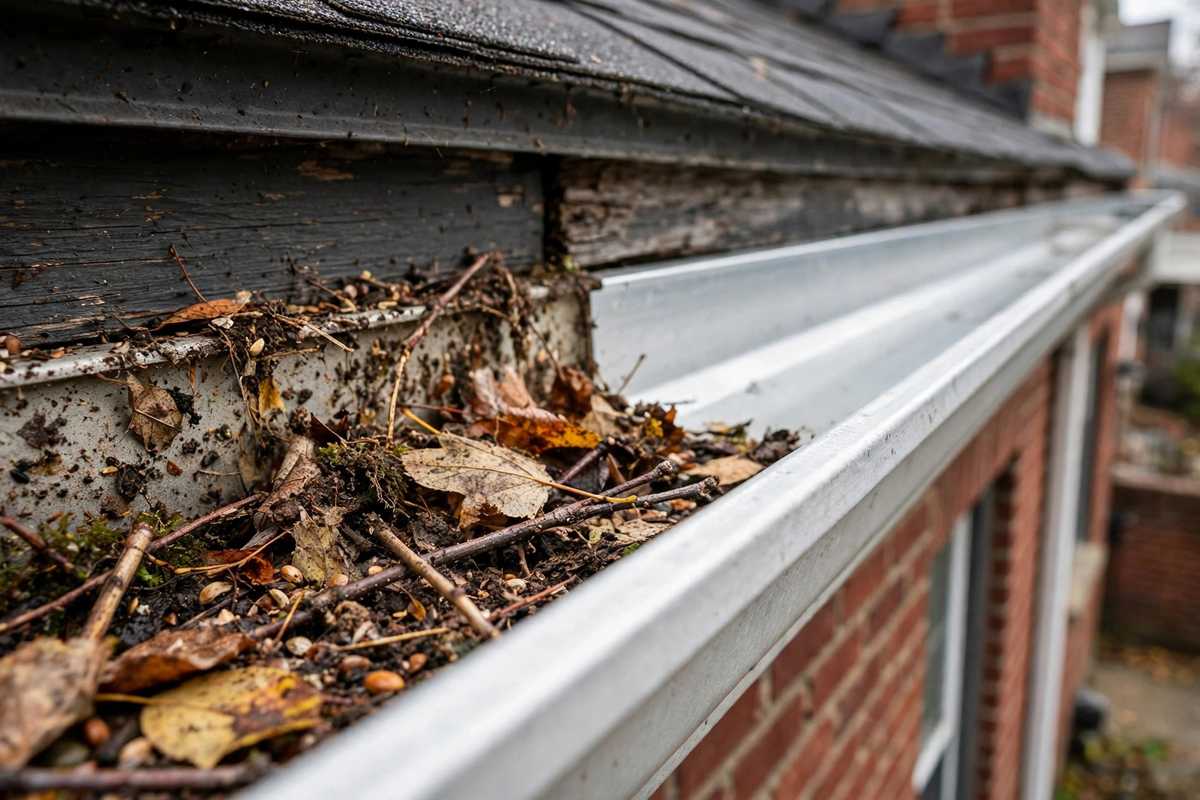
Rogers Park was annexed in 1893, and the 'L' brought a 1920s apartment boom that filled the area with pre-war three-storey brick courtyard buildings, many later converted to condos. West of the Metra tracks toward Ridge Avenue, Victorian and early-1900s houses and two-flats survive on quieter blocks, while lakefront mansions and foursquares, including the Emil Bach House of 1915 and the Lang House of 1919, stand among the towers. Homes of this era typically divide into two drainage systems: pitched eave gutters on houses and foursquares, and parapet, scupper, and internal-drain systems on flat-roofed courtyard blocks, so seamless gutter installation is planned per building, never per area.
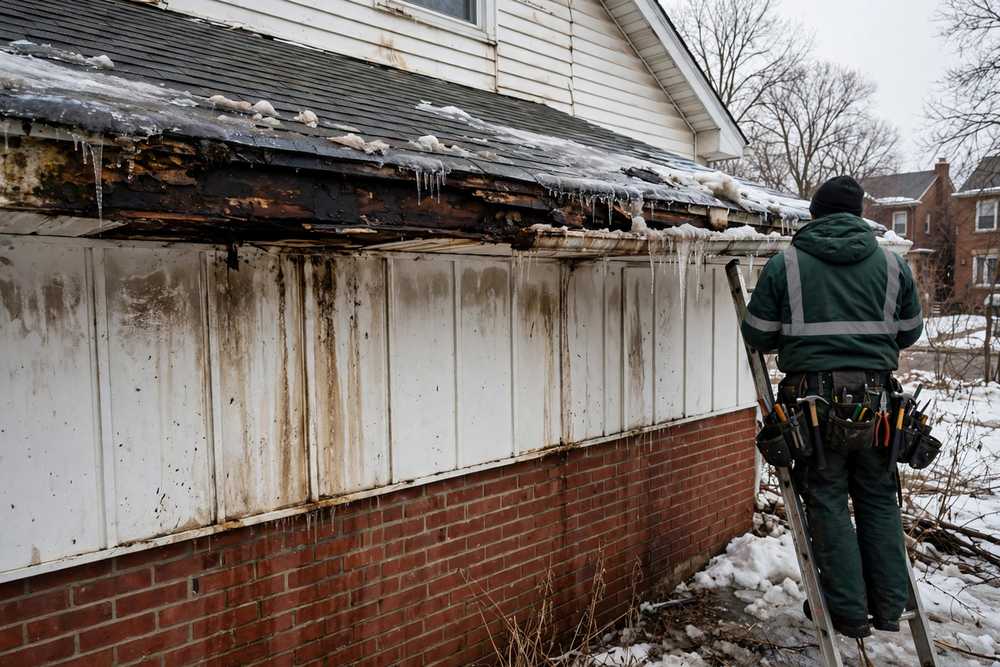
Apartments and condos predominate here, which makes shared downspouts and association responsibility a practical question on converted courtyard buildings; settle who owns the shared leader before work begins. The 1898-1912 'Built by Thompson' luxury houses along Jarvis, Chase, Estes, Touhy, Fargo, and Sheridan add large-footprint pitched roofs to the mix. Buildings set directly on the beach edge face stronger lakefront wind exposure, and homes of this era typically show their age first at fasteners and joints, which is why gutter cleaning and downspout repair visits here include a close look at how each run is anchored.
No residential landmark district has been verified in Rogers Park, so this page claims none. Two individual landmarks stand here: the Emil Bach House at 7415 N Sheridan, designated in 1977, and the Jackson-Thomas House at 7053 N Ridge, dating to 1874. Do not confuse the area with the Rogers Park Manor Bungalow District, which sits in West Ridge, not Rogers Park. For any designated address, check the designation details for that specific property before work begins.
Explore Rogers Park services →