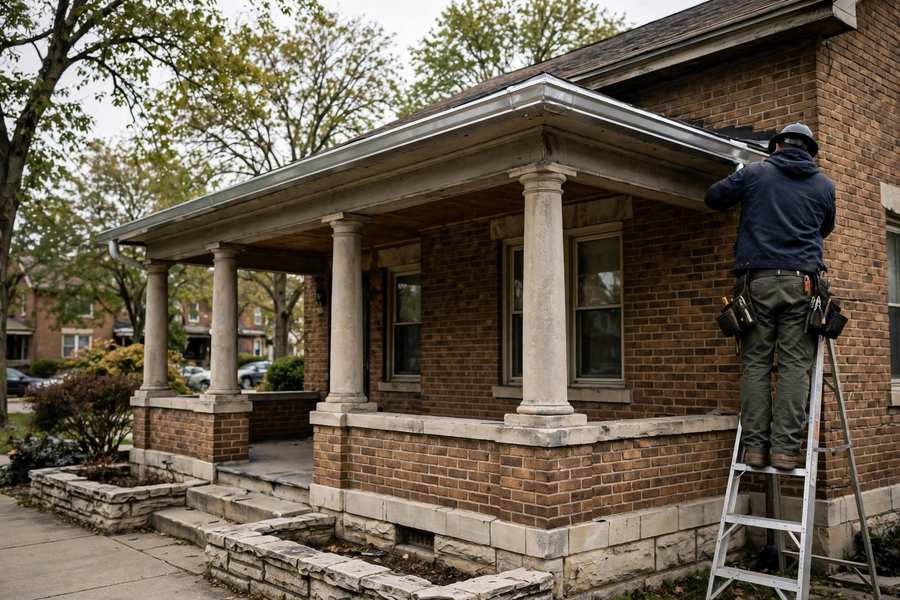
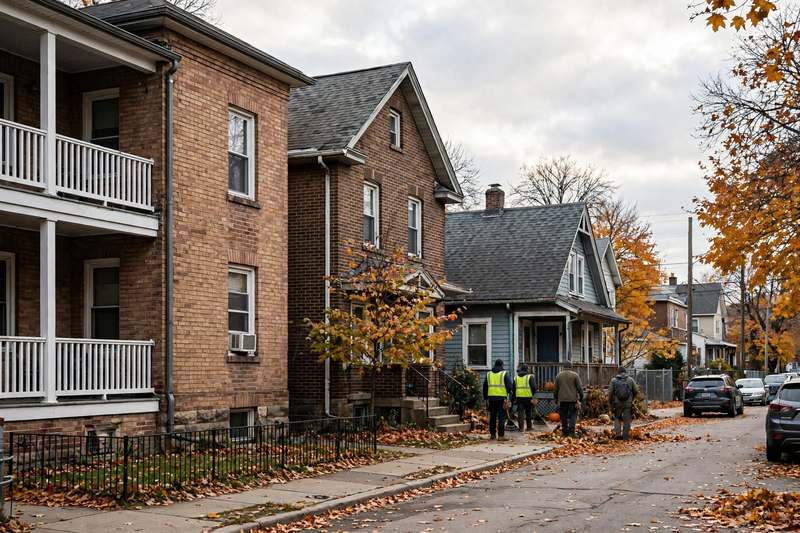
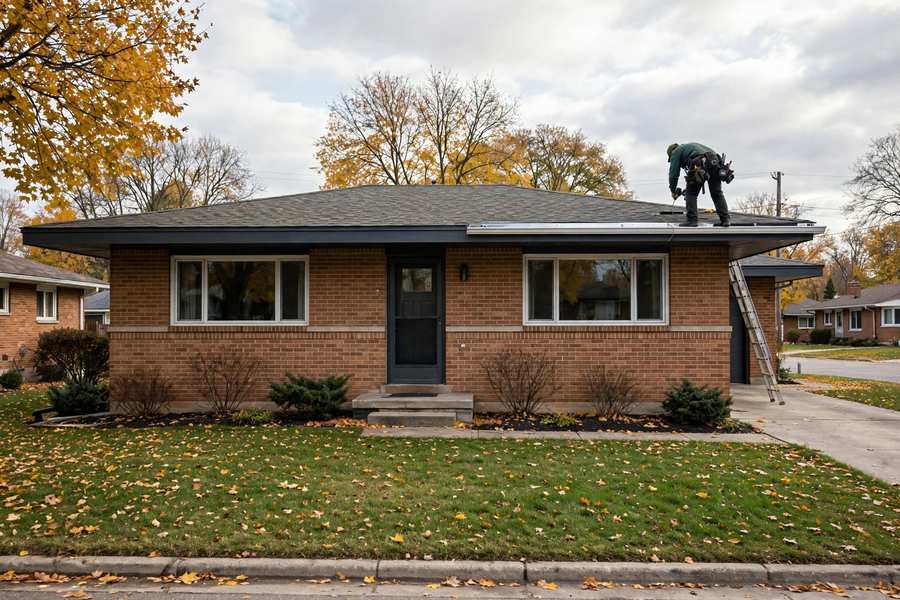
Whiskey Point became an industrial settlement when the Cragin Brothers plant opened on about 11 acres beside a rail station in the 1880s, annexation followed in 1889, and the W. F. Hall Printing plant arrived on 17 acres in 1922 with Zenith and Ecco nearby. The stock today is bungalows, Cape Cods, two-flats, and apartment buildings built for factory workers, with the Belmont Park subdivision to the east and Falconer bungalows noted for full-length open-air front porches. Pitched bungalow and Cape Cod roofs mix with flat two-flat roofs, and homes of this era typically split into three systems: low-pitch bungalow eaves, steep-pitch Cape Cod eaves with dormer valleys, and flat two-flat drainage, so gutter repair is planned per form.
Cape Cod steep pitches shed water faster than low-pitch bungalow roofs, with dormer valleys concentrating flow, while open-porch Falconer bungalows add porch-roof drainage as a secondary system in front of the main eave. Full basements, clay laterals, and combined sewers make extensions and grading relevant, and gutter work is never presented as a cure for sewer surcharge: gutters manage roof water, and they do not prevent sewer backups. The industrial corridor along the rail line and the Brickyard Mall and Belmont Central commercial areas sit outside the residential scope, and downspout discharge is placed with the lot's grading in mind.
The Falconer Bungalow Historic District was listed on the National Register on 7 March 2007, covering about 348 bungalows from 1915 to 1931 near Wellington, Lamon, and Laramie and the alley north of Diversey, by Braucher and Knudson, with no Chicago Landmark designation. Rail and industrial debris claims are unverified and are not made here. Check the designation details for the specific address before work, since National Register listing is honorary and is not Chicago Landmark review.
Explore Belmont Cragin services →