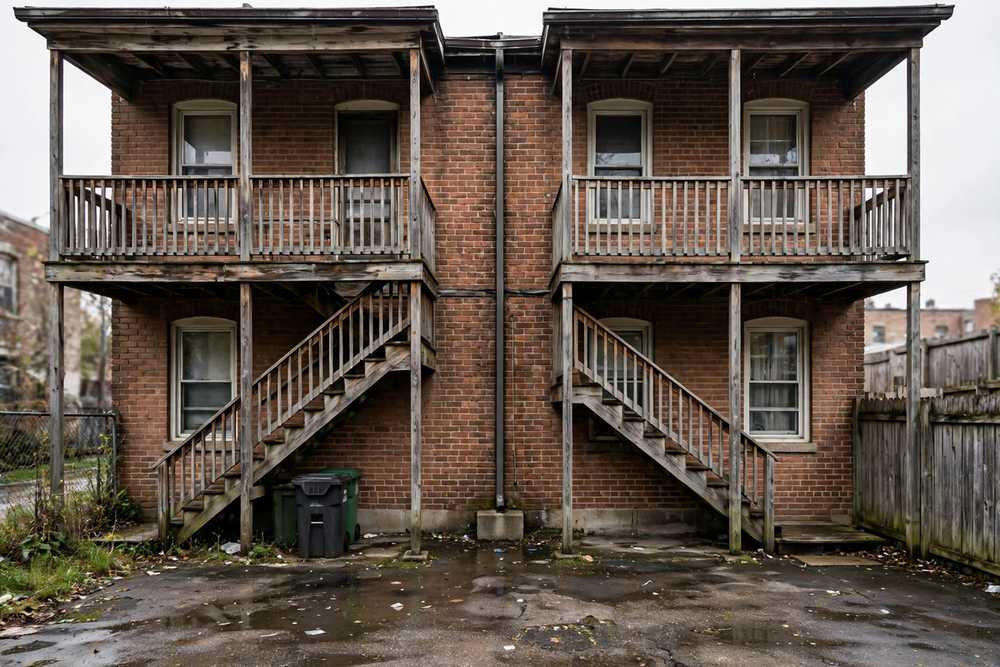
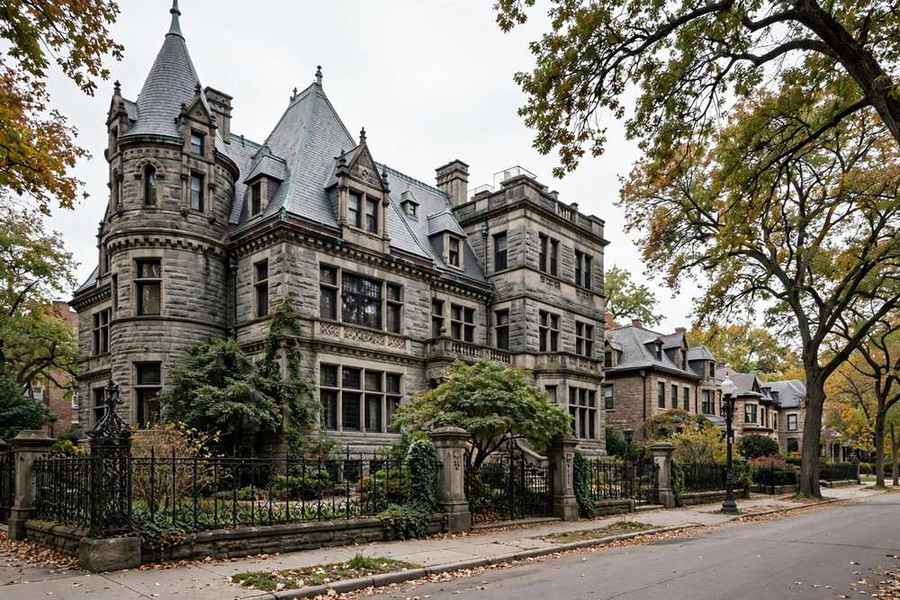
Annexed in 1889, Logan Square built out along its boulevards in sequence: large single-family homes first, then two- and three-flats and small apartments in the 1900s, then larger apartments and institutional buildings in the 1910s and 1920s, with stone and brick mansions, substantial greystones, and bungalow-style homes facing landscaped medians. Off the boulevards stand two- and three-flats, frame cottages, and courtyard buildings from about 1890 to 1920, much of it condo-converted since the 1990s, while the Belmont Gardens and Kosciuszko Park pocket holds brick bungalows, two-flats, and small apartments on wide lots, and Palmer Square holds large single-family homes and greystones facing the park. Homes of this era typically divide three ways: pitched and complex boulevard houses, flat flats and courtyards, and pitched bungalows in Belmont Gardens, so gutter repair follows the street, not the area.
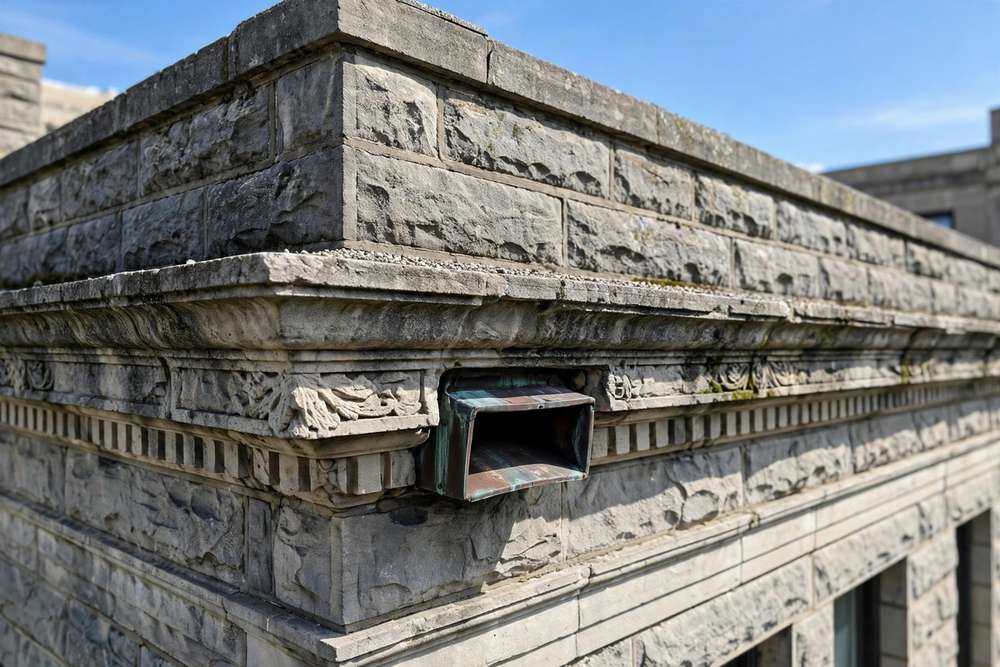
Boulevard greystones and mansions carry large footprints, tall eaves, and complex rooflines with bays, dormers, and porches, needing longer and higher runs. Built-in box gutters and copper profiles are plausible on 1890-1915 boulevard houses but not verified, framed as 'verify original detail' on every visit. Shared and condo drainage serves converted flats and courtyards, boulevard median trees add leaf loads, teardown and larger upscale replacement mixes old and new eave lines, and gutter cleaning on a boulevard block follows the building in front of us.
The Logan Square Boulevards District is on the National Register since 1985 and a Chicago Landmark since 2005, covering 265 acres along Logan, Kedzie, Humboldt, and Palmer plus Logan and Palmer Squares. Exterior work visible from the boulevard may need a check of the designation details for the address before work. The Milwaukee-Diversey-Kimball District is a commercial strip and sits outside residential scope. Bucktown is in Logan Square's eastern part, not in West Town, and this page covers it.
Explore Logan Square services →