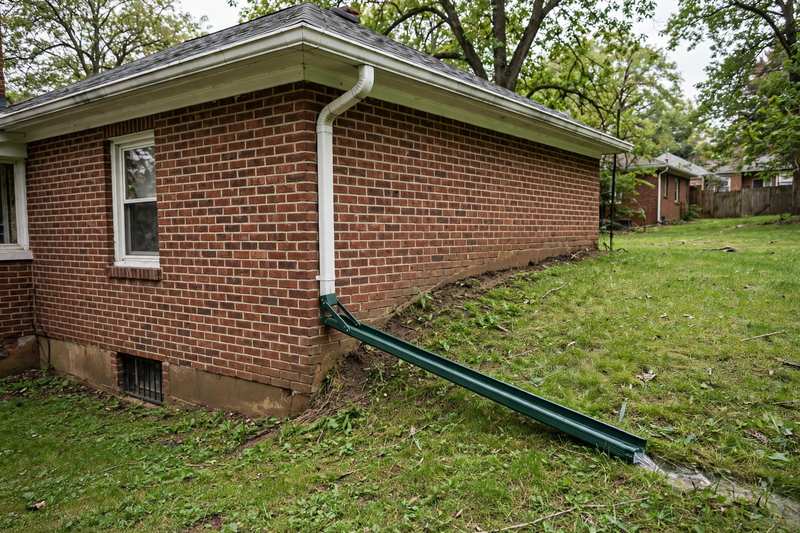
Frame homes dominate the core of Jefferson Park, joined by Dutch Colonials that are rare elsewhere in Chicago, brick bungalow pockets, and Tudor Revivals north of Elston and south of the Kennedy, with ornate two-flats on the southern blocks. Victorian, Georgian, bungalow, Cape Cod, and ranch houses fill the remaining blocks, and modern condos and larger apartments cluster near the Blue Line. The area is mostly single-family and predominantly pitched, with flat roofs only on two-flat and apartment blocks, so homes of this era typically carry eave gutters, and gutter repair starts with the substrate: wood fascia on frame houses, brick on bungalow blocks.
Dutch Colonial gambrel roofs break at the bend, dividing eaves into segments with valleys that concentrate water, a signature worth planning around rather than forcing into a straight-run template. A single local listing mentions gutters and a roof with an ice melt system, single-listing evidence that heat-cable use exists locally, and ice dam prevention planning follows the roof in front of us. The Gladstone Park pocket holds quieter residential blocks beside the transit-hub apartment blocks, and the South Edgebrook overlap at the edge calls for boundary care, since Edgebrook character is not a district claim.
No landmark district has been verified in Jefferson Park, so this page claims none, and Gladstone Park and South Edgebrook character are not district designations. The 'Gateway to Chicago' transport layering, with rail and highway corridors crossing the area, sits beside a quiet residential interior, and this page stays with the houses. Tudor houses and ornate two-flats on the southern blocks grade into bungalow and Tudor blocks to the north, so each street is read on its own mix of forms.
Explore Jefferson Park services →