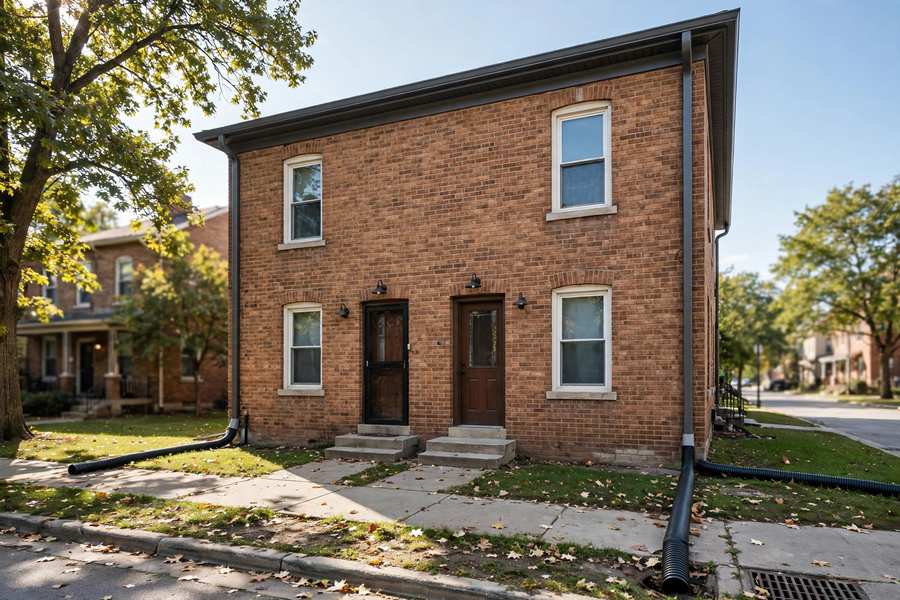
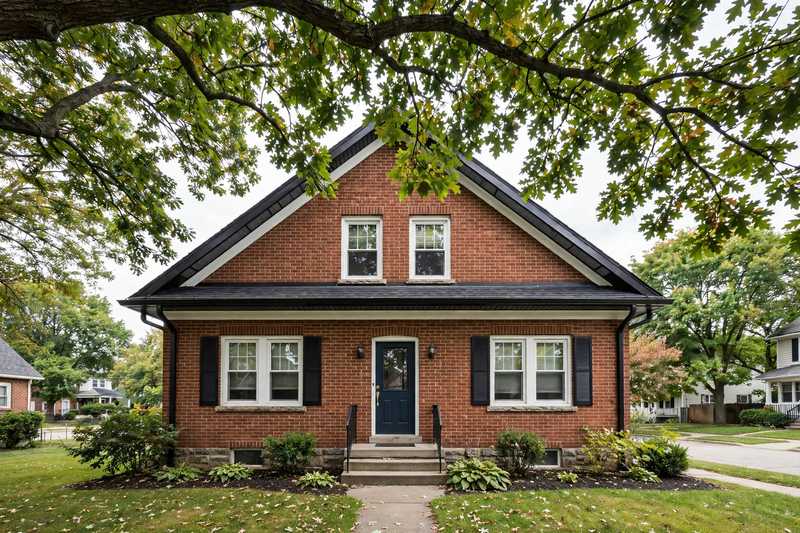
Forest Glen covers about 3.21 square miles with roughly 19,500 to 19,900 residents, and its housing is almost entirely detached single-family: brick bungalows, post-war ranches and split-levels, Colonial and Tudor revivals, and larger custom builds on wide lots, built from the 1920s to the 1960s. Old Edgebrook holds large, stately homes built for railroad executives from the 1890s in Colonial Revival and Queen Anne styles, while Sauganash, laid out in 1912 with curving streets and large lots, mimics North Shore suburbs. Roofs are predominantly pitched, and homes of this era typically carry K-style eave gutters, with long runs on wide-lot ranches and split-levels and valley-heavy runs on revival houses, so gutter repair follows the lot and the roofline together.
Forest preserves wrap the area: Caldwell Woods, LaBagh Woods, Bunker Hill, Billy Caldwell, and Forest Glen Woods, plus golf courses, and the Old Edgebrook report names oak, elm, maple, hickory, and walnut woods. That adjacency makes the strongest leaf-load case among the north-side areas studied, still an inference as a gutter finding, and branch fall joins leaf fall as a seasonal risk unlike grid areas. Gutter cleaning and gutter guard decisions here weigh canopy first, and golf-course and river-corridor open space adds wind exposure on the most open blocks.
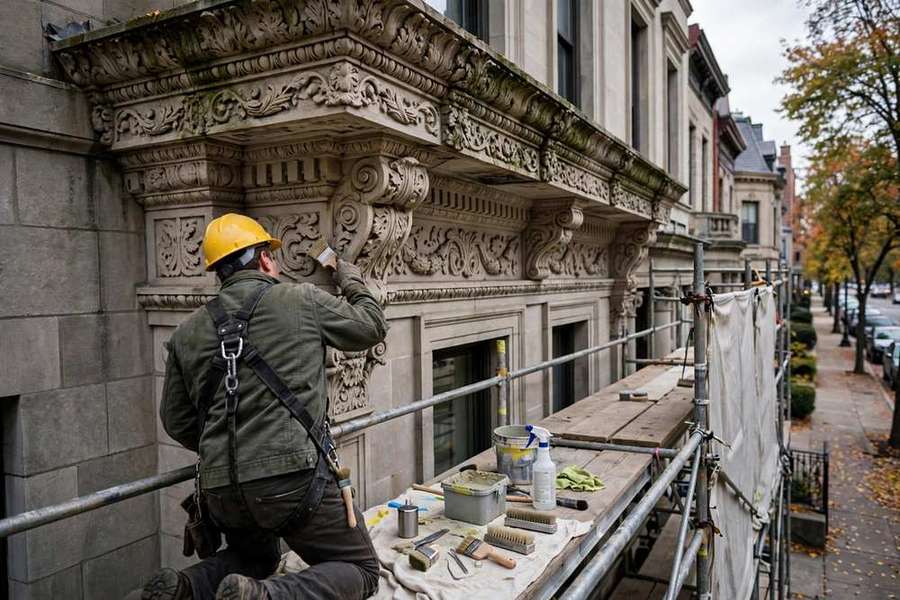
The Old Edgebrook District is a Chicago Landmark, designated on 14 December 1988, covering Prescott, Mandell, Louise, and Livermore plus adjacent Forest Preserve land, with railroad-executive homes from the 1894 Dixon development; a guide giving 1998 is wrong. A Sauganash Historic District is named in sources, but its designation type, date, and bounds are not verified, so it is not described here as a landmark district. Check the designation details for the specific address before work on designated blocks.
Explore Forest Glen services →