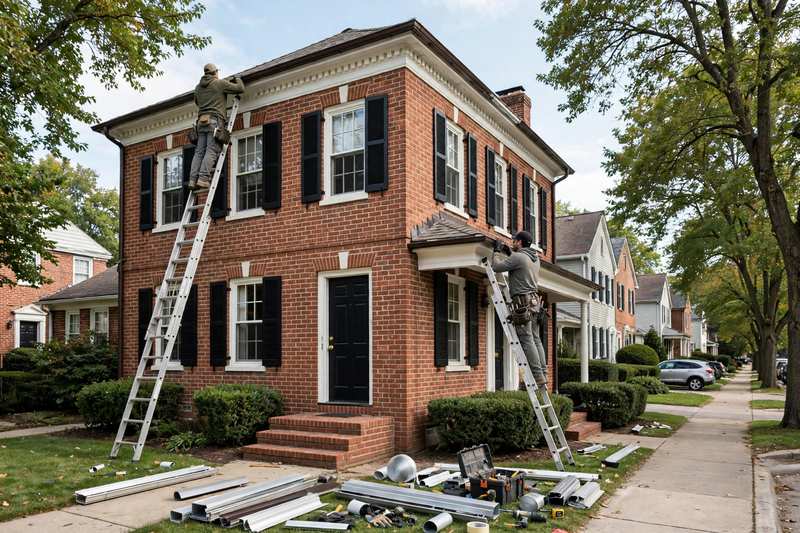
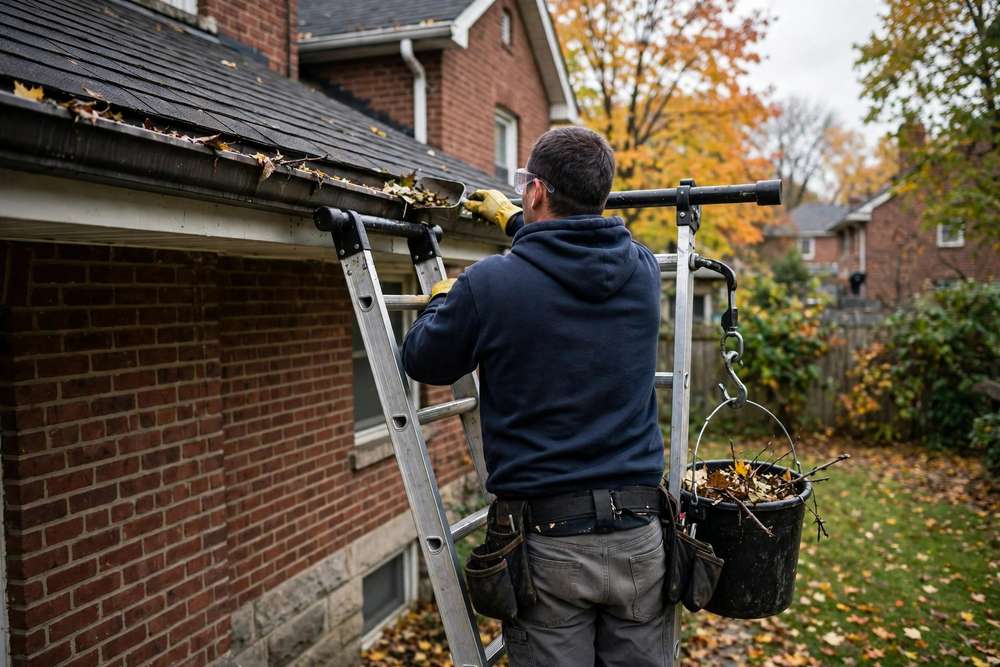
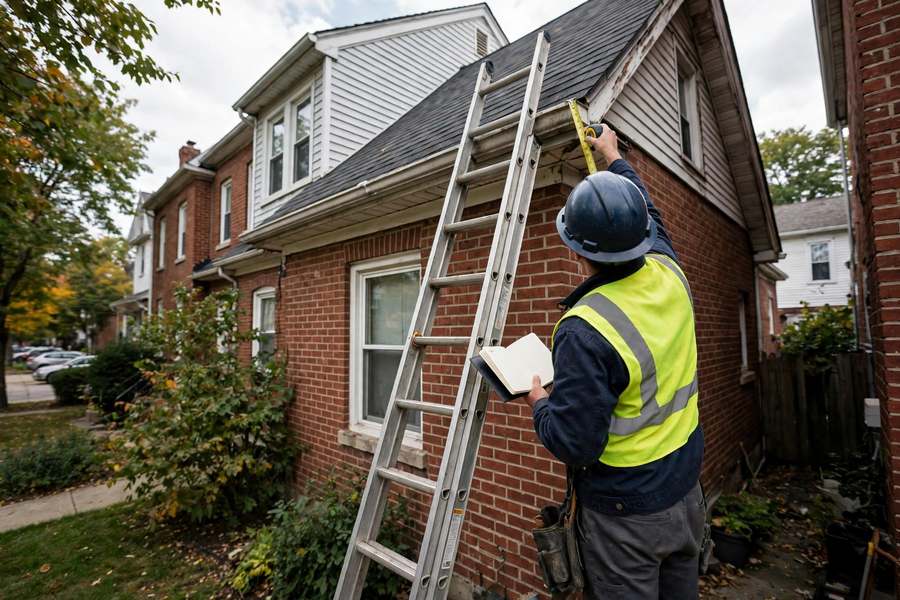
Old Irving Park, bounded by Montrose, Pulaski, Addison, and Cicero, holds Queen Anne, Victorian, and Italianate houses, farmhouses, and bungalows, with frame Victorians and Queen Annes from the 1880s and 1890s on lots far wider than 25 feet. The Villa District holds Craftsman and Prairie bungalows and Foursquares, largely built between 1907 and 1922, on boulevard streets with landscaped parkways under a bungalow-mode covenant. Elsewhere stand brick bungalows, brick two-flats, large brick houses around Independence Park, Kilbourn Park blocks, and post-war infill and rebuilds. Pitched roofs dominate, with flat roofs only on two-flats, so homes of this era typically carry eave gutters, and gutter repair follows two eave languages: Victorian complexity and Prairie simplicity.
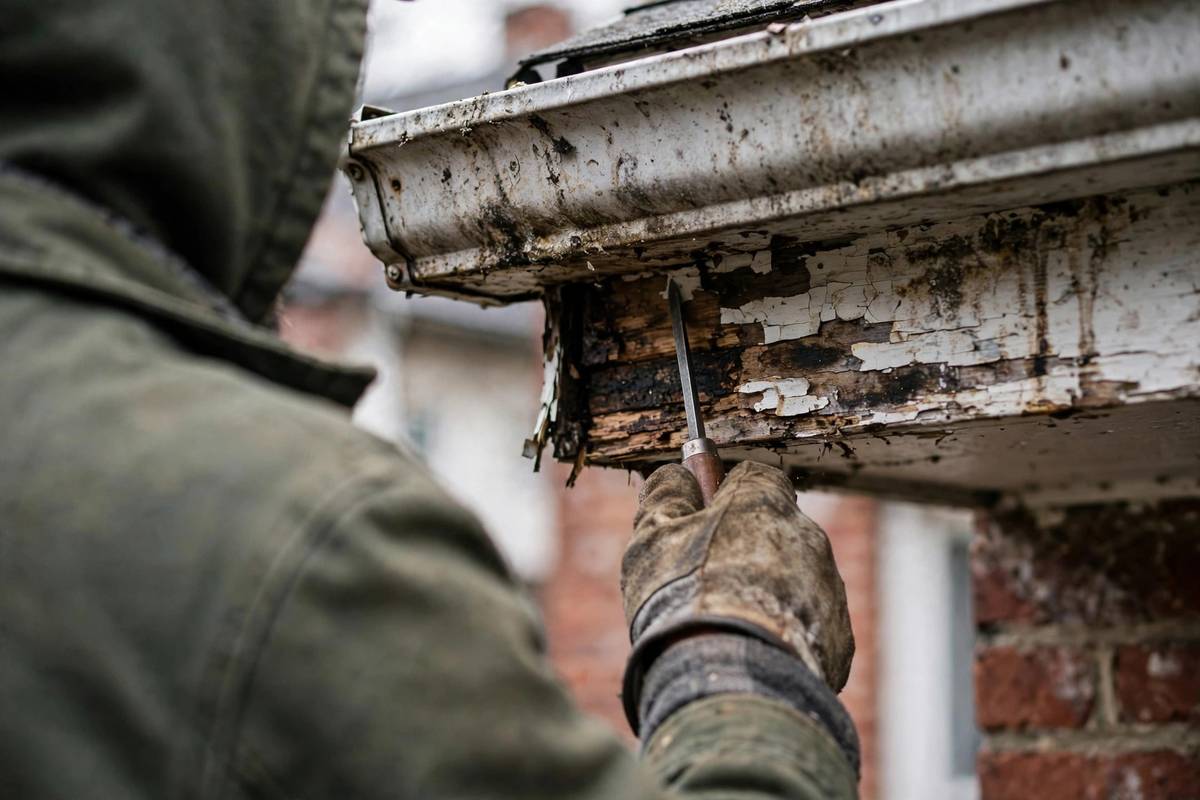
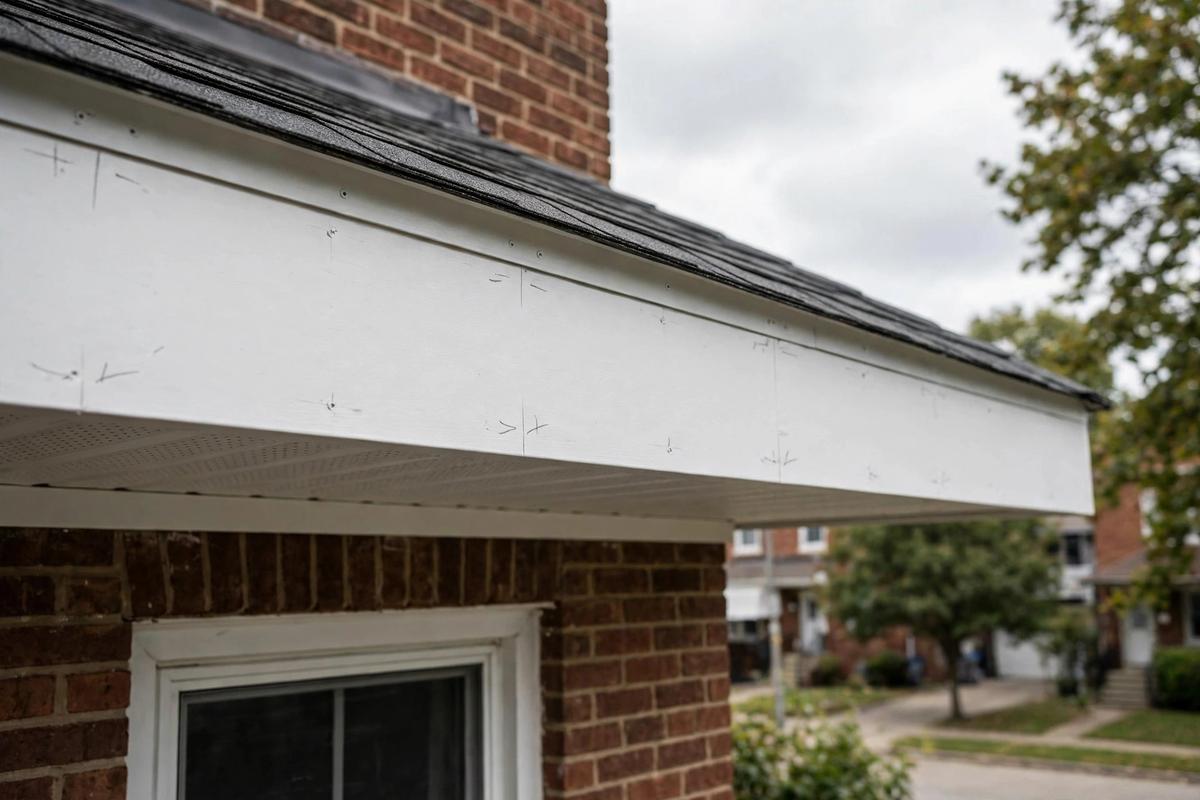
Victorian frame houses carry complex pitched roofs with wood fascia and valley-heavy intersections, while Villa bungalows carry low-pitched Prairie and Craftsman roofs with wide overhangs, where built-in or box details or exposed-rafter details are possible but not verified; original eave details are checked rather than assumed on every Villa visit. Wide lots allow generous discharge and grading room, coach houses add secondary scope where they exist, verified per lot, and downspout repair here uses the room that wide lots provide.
The Villa District is on the National Register, listed on 11 September 1979 with an increase on 10 March 1983, and a Chicago Landmark since 23 November 1983, covering Pulaski, Addison, and Avondale Avenue, with construction from 1902 and largely 1907-1922. Restrictive covenants and the Villa Improvement League, a preservation league and not a homeowners association, shaped the district. Old Irving Park holds survey documentation but no verified district, and a claim of two landmark districts in the area is unverified and is not repeated here. Check the designation details for the specific address before work.
Explore Irving Park services →